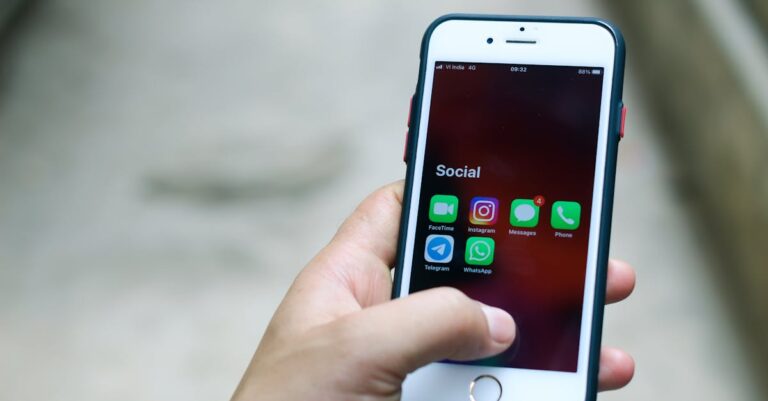
In a world where 5G is the new gold standard for mobile connectivity, the iPhone 6 stands as a nostalgic relic of simpler times. Released in 2014, this once-revolutionary device now feels like a flip phone in the age of smartphones that can practically read your mind. So, does the iPhone 6 have 5G? Spoiler alert: it doesn’t.
While it’s tempting to hold onto those memories of scrolling through Instagram on a device that felt cutting-edge, the iPhone 6 lacks the hardware to support the lightning-fast speeds of 5G. But don’t fret just yet; this article dives into what that means for users, the evolution of iPhones, and whether it’s time to upgrade or keep rocking that vintage tech. After all, who doesn’t love a good trip down memory lane?
Table of Contents
ToggleOverview of 5G Technology
5G technology represents the fifth generation of mobile networks, significantly enhancing speed and connectivity. Enhanced data transfer rates can reach up to 10 Gbps, allowing seamless streaming and quick downloads. Lower latency improves real-time communication, making applications like gaming and video conferencing more efficient.
Diverse technologies support 5G, including millimeter wave, sub-6 GHz, and massive MIMO (multiple-input, multiple-output). Each technology serves different coverage and performance requirements. Increased network capacity accommodates more devices, boosting overall user experience in crowded areas.
Multiple industries benefit from the adoption of 5G. In healthcare, remote surgeries potentially occur with minimal delays. In transportation, advancements in connected vehicles rely heavily on 5G for safety and efficiency. Smart cities utilize 5G for enhanced infrastructure, improving public services and resource management.
Global rollout of 5G began in 2019, expanding rapidly across metropolitan areas. By 2023, numerous regions gained access, yet availability varies by provider and location. Compatibility with devices remains crucial; only smartphones and equipment designed for 5G can utilize these networks.
Multiple challenges accompany the implementation of this advanced technology. Privacy concerns arise as more devices connect to the internet, potentially exposing sensitive data. Infrastructure requirements necessitate significant investment, especially in upgrading existing networks.
Understanding the implications of 5G technology sheds light on the advancements made since the 2014 release of the iPhone 6. Devices without 5G capability will face limitations in leveraging these enhanced services, making it essential for users to consider their options moving forward.
iPhone 6 Specifications
The iPhone 6, released in 2014, features specifications that align with its era. While it represented a significant upgrade from prior models, the lack of 5G support greatly limits its modern application.
Network Capabilities
The iPhone 6 operates on 4G LTE technology, supporting network speeds up to 150 Mbps. This capability marked a leap forward, promoting smoother web browsing and video streaming compared to earlier devices. In contrast, lack of 5G connectivity restricts access to today’s high-speed networks, which can reach up to 10 Gbps. Users seeking fast mobile data for gaming or streaming find the phone inadequate in current network environments. Compatibility with 3G and LTE networks remains, yet rapid advancements in wireless technology render these capabilities insufficient for modern demands.
Hardware Limitations
The A8 chip powers the iPhone 6, delivering adequate performance for its time. This processor supports basic tasks but struggles with demanding applications in today’s market. Memory options range from 1 GB RAM and storage capacities from 16 GB to 128 GB, limiting multitasking abilities and app storage. Graphics capabilities, backed by the dedicated GPU, deliver decent performance in games from its release period but may falter with newer titles. Battery life lasts around 14 hours of talk time, yet power-hungry apps drain the battery faster than users expect. Ultimately, hardware constraints hinder the iPhone 6 from competing with contemporaries equipped for 5G networks.
Comparing iPhone Models
Comparing iPhone models reveals significant differences in performance and connectivity, especially concerning 5G technology.
iPhone 6 vs. iPhone 6s
iPhone 6s introduces notable enhancements over iPhone 6. First, it features the A9 chip, providing improved processing speeds and graphics performance. Users benefit from 2 GB of RAM compared to iPhone 6’s 1 GB, allowing for better multitasking capabilities. Additionally, the 6s supports Live Photos and 4K video recording, showcasing advancements in camera technology. However, both models lack 5G support, which limits their usability in today’s fast-paced network environment.
Evolution of iPhone Models and 5G
Evolution of iPhone models illustrates a significant shift toward embracing 5G technology. Starting with iPhone 12, Apple integrated 5G capabilities, dramatically enhancing download and upload speeds. Each iteration since has improved hardware, supporting higher data transfer rates essential for contemporary applications. Users seeking the latest technology must consider models beyond iPhone 6 and 6s. Improvements in battery life, camera quality, and software optimization characterize newer models, making them more suitable for current network demands. Keeping the focus on 5G, the capabilities of newer devices meet the expectations of modern smartphone users.
User Experience with iPhone 6
Users often experience limitations with the iPhone 6 in today’s 5G landscape. Its absence of 5G connectivity creates notable barriers for users wanting to access faster networks.
Connectivity Issues
Connectivity issues arise for iPhone 6 users relying solely on 4G LTE networks. Speeds peak at 150 Mbps, which falls short compared to 5G networks offering up to 10 Gbps. Users encountering slow download times and lags perform basic tasks like browsing or streaming. The lack of 5G support means navigating areas with high network demand often proves frustrating. Users hoping to stream high-definition content or engage in multiplayer gaming face significant interruptions. Therefore, heavy data users frequently consider alternatives that provide improved connectivity options.
Performance on 4G Networks
Performance on 4G networks presents mixed experiences for iPhone 6 users. Basic tasks such as web browsing and social media perform adequately, but demanding applications often reveal limitations. Users running multiple apps at once may experience noticeable lag due to the device’s 1 GB RAM. Streaming videos can prove manageable, but high-definition content occasionally buffers, disrupting enjoyment. Given the advancements in smartphone technology, the iPhone 6’s reliance on its A8 chip shows its age when placed against contemporary devices. Users relying on consistent performance in various settings often feel the strain of outdated hardware, making upgrades an attractive consideration.
The iPhone 6 stands as a testament to earlier smartphone innovations but falls short in the age of 5G. Its reliance on 4G LTE limits users who crave faster connectivity and enhanced performance. As technology continues to evolve rapidly the constraints of the iPhone 6 become more apparent. Users must weigh the nostalgia of this vintage device against the demands of modern applications and services.
For those seeking improved speed and functionality exploring newer models with 5G capabilities is essential. Upgrading not only enhances connectivity but also ensures a smoother user experience in today’s fast-paced digital landscape.